Article
256
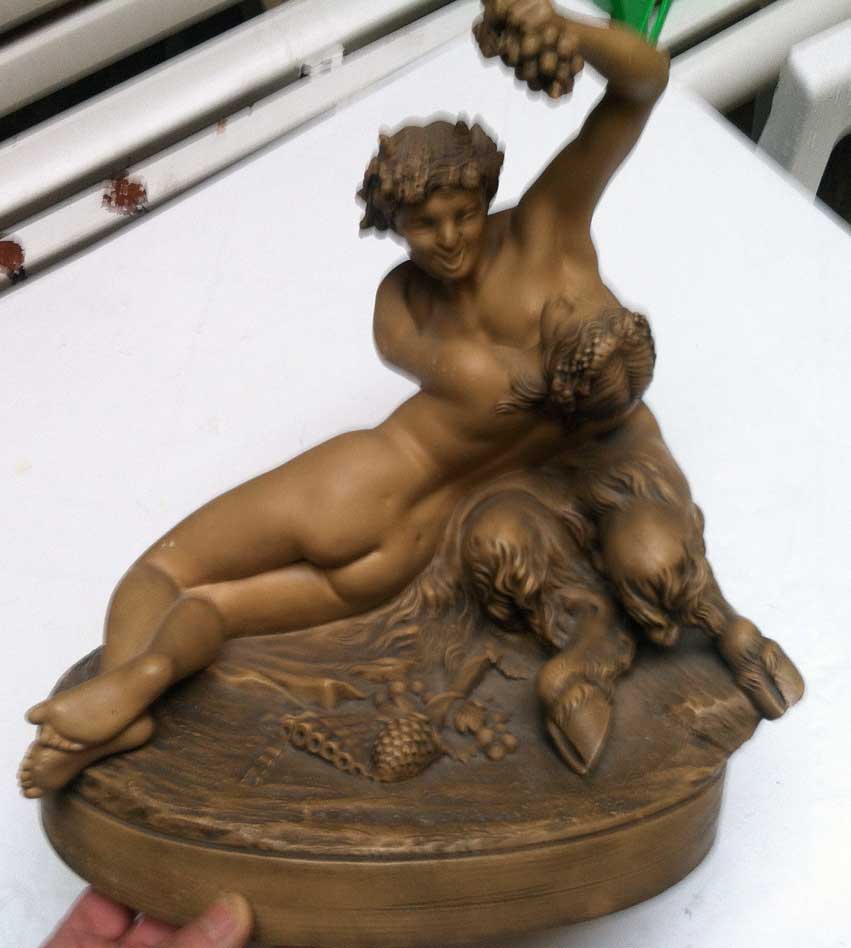
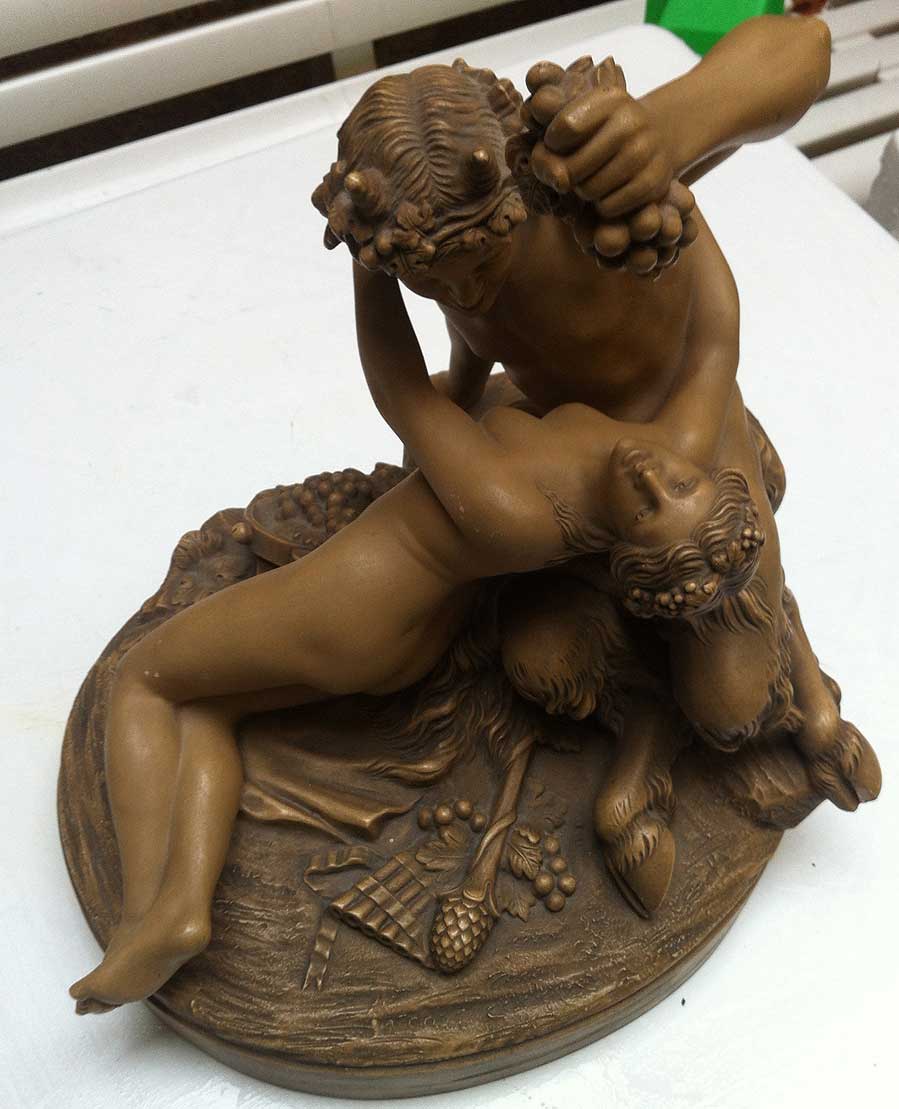
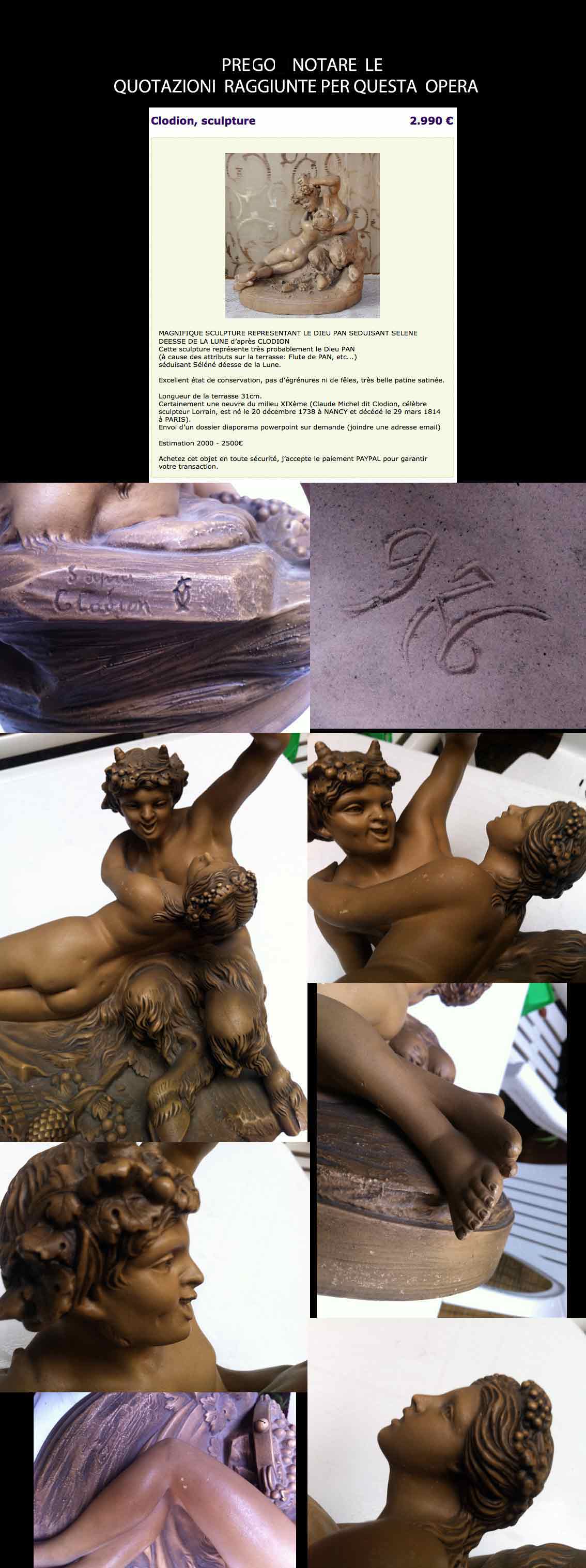
NYMPH SCULPTURE WITH SATYR BY CLODION
ANTIC
ENGLISH<br>
SPECIAL PIECE FOR YOUR COLLECTION PLEASE NOTE THIS 'LISTED GREAT WORK
OF CLODION THE PRICE SOLD.WE YOU PROPOSE AND' A REAL DEAL, THIS
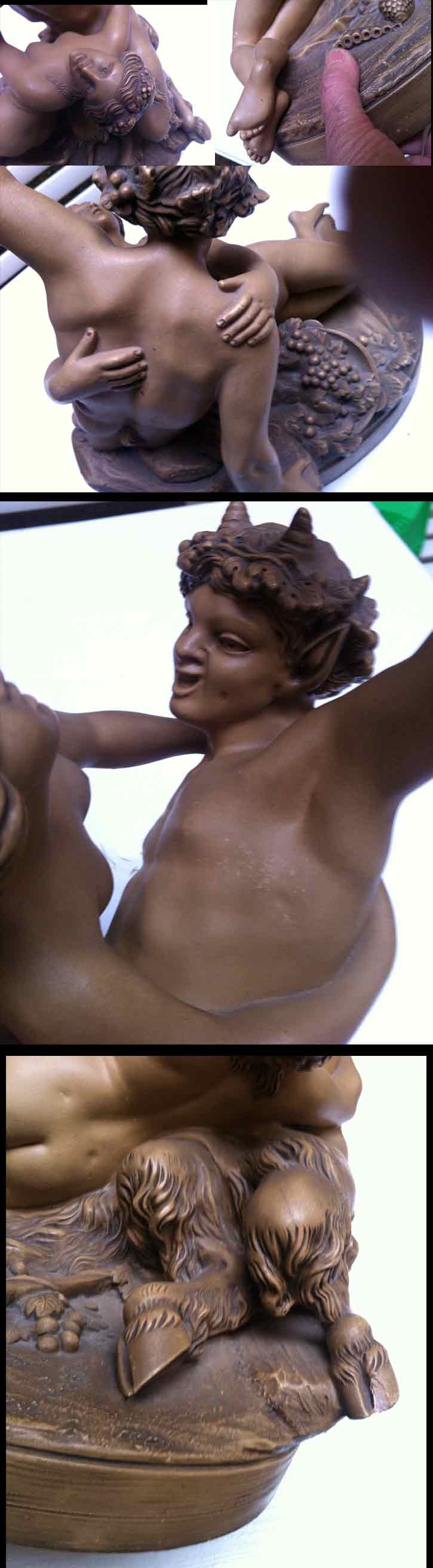
MASTERPIECE IS IN ABSOLUTELY PERFECT CONDITION ORIGINAL EXCEPT
small DROP OF COLOUR YOU CAN SEE IN THE PHOTOS WHERE YOU CAN SEE
THE EXTRAORDINARY BEAUTY OF THIS MASTERPIECE. IF YOU WANT MORE PHOTOS
CAN ASK US <br>
ITALIAN <br>
STRAORDINARIO PEZZO DA COLLEZIONE VI FACCIO NOTARE QUANTO E' QUOTATA
QUESTA OPERA DI CLODION E IL PREZZO CHE VI PROPONGO E' UN VERO AFFARE,
NON E' UNA RIPRODUZIONE MA UN OPERA ASSOLUTAMENTE ORIGINALE IN PERFETTE
CONDIZIONI ECCETTO PICCOLISSIME CADUTE DI COLORE CHE SI POSSONPO NOTARE
DALLE FOTO MA CHE NON TOLGONO NULLA ALLA STRAORDINARIA BELLEZZA DI
QUESTO CAPOLAVORO. SE VOLETE ALTRE FOTO POSSIAMO MANDARVELE<br>
BIOGRAFIA<br>
Claude Michel (December 20, 1738 – March 29, 1814), known as Clodion,
was a French sculptor in the Rococo style. He was born in Nancy. Here
and probably in Lille he spent the earlier years of his life. In 1755
he came to Paris and entered the workshop of Lambert Sigisbert Adam,
his maternal uncle, a clever sculptor. He remained four years in this
workshop, and on the death of his uncle became a pupil of J. B.
Pigalle. In 1759 he obtained the grand prize for sculpture at the
Académie Royale; in 1761 he obtained the first silver medal for studies
from models; and in 1762 he went to Rome. Here his activity was
considerable between 1767 and 1771.<br>
Catherine II of Russia was eager to secure his presence in St
Petersburg, but he returned to Paris. Among his patrons, which were
very numerous, were the chapter of Rouen, the states of Languedoc, and
the Direction generale. His works were frequently exhibited at the
Salon. In 1782 he married Catherine Flore, a daughter of the sculptor
Augustin Pajou, who subsequently obtained a divorce from him. The
agitation caused by the French Revolution drove Clodion in 1792 to
Nancy, where he remained until 1798, his energies being spent in the
decoration of houses.<br>
Among Clodion's works are a statue of Montesquieu, a Dying Cleopatra,
and a chimneypiece at present in the Victoria and Albert Museum,
(London). One of his last groups represented Homer as a beggar being
driven away by fishermen (1810). Clodion died in Paris, on the eve of
the invasion of Paris by the forces of the Sixth Coalition.<br>
Among the public collections holding works by Claude Michel are: the
Art Institute of Chicago, the Bowes Museum (County Durham, UK), the
Carnegie Museum of Art (Pittsburgh, Pennsylvania), the Cleveland Museum
of Art, the Courtauld Institute of Art (London), the Currier Museum of
Art (New Hampshire), the Detroit Institute of Arts, the Fine Arts
Museums of San Francisco, the Frick Collection (New York City), the
Getty Museum (Los Angeles), the Honolulu Museum of Art, the Kimbell Art
Museum (Fort Worth, Texas), Kunst Indeks Danmark, the Louvre (Paris),
the Metropolitan Museum of Art, Musée Cognacq-Jay (Paris), the Museum
of Fine Arts (Boston), Musée des Beaux-Arts (Bordeaux), Museum Boijmans
Van Beuningen (Rotterdam), National Museum of Art (Cluj-Napoca), the
National Gallery of Armenia, the National Gallery of Art (Washington
D.C.), the Norton Simon Museum (Pasadena, California) and the
Philadelphia Museum of Art.<br>

 Gallery